

Dr. Volkan Çakır is a highly experienced Specialist in Interventional Radiology with over 15 years of experience. He completed his medical education at Dokuz Eylül University, School of Medicine, and further specialized in radiology. Dr. Çakır has held prominent positions such as Head of the Interventional Radiology Department and Associate Professor at reputed institutions in Turkey.
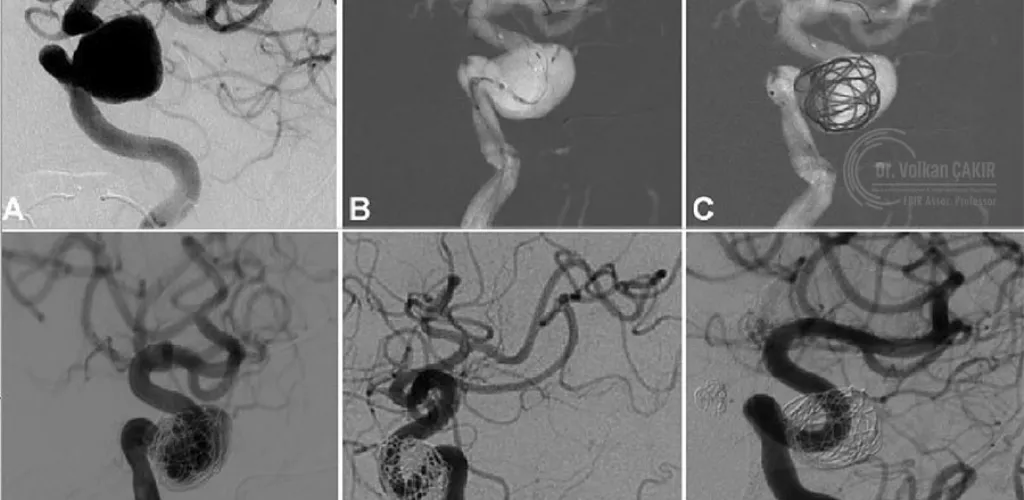
Living with a complex brain aneurysm can be life-threatening, unpredictable, and emotionally overwhelming. Advances in endovascular treatment for intracranial aneurysms now offer a highly effective, minimally invasive solution to manage even the most challenging cases — without the need for open brain surgery.
This modern approach has revolutionized brain aneurysm treatment, improving safety, reducing recovery time, and delivering excellent long-term outcomes for patients worldwide.
🔬 What is Endovascular Treatment?
Endovascular therapy is an advanced, image-guided procedure performed by a neurointerventional radiologist. Through a small puncture—usually in the groin or wrist—a microcatheter is carefully navigated through the vascular system to reach the aneurysm in the brain.
Using real-time, high-resolution imaging, specialized devices such as coils, stents, and flow diverters are precisely deployed to seal off the aneurysm from circulation. This prevents rupture and significantly reduces the risk of subarachnoid hemorrhage and stroke.
Unlike traditional surgery, this technique avoids large incisions and direct manipulation of brain tissue, making it a safer and more patient-friendly alternative.
💡 Commonly Used For:
• Wide-neck intracranial aneurysms
• Giant or complex brain aneurysms
• Recurrent aneurysms after prior treatment
• Fusiform and dissecting aneurysms
• High-risk aneurysms not suitable for open surgery
• Multiple aneurysms requiring staged or combined approaches
⏱️ Why Patients Choose Endovascular Treatment:
✔️ No open brain surgery (no craniotomy)
✔️ Minimally invasive with tiny entry point
✔️ Faster recovery and quicker return to daily life
✔️ Shorter hospital stay, often 1–2 days
✔️ Lower complication risk compared to traditional surgery
✔️ High precision with state-of-the-art imaging technologies
🌍 A Breakthrough in Neurovascular Care
Endovascular techniques, including flow diversion and coil embolization, have transformed the management of complex intracranial aneurysms. These procedures are now considered first-line treatments in many cases due to their safety profile and effectiveness.
Patients benefit not only from reduced procedural risks but also from improved quality of life, minimal scarring, and faster rehabilitation. Early diagnosis and timely intervention are critical in preventing potentially fatal complications.
If you or a loved one has been diagnosed with a complex intracranial aneurysm, consulting with an experienced neurointerventional specialist can help determine whether endovascular treatment is the most appropriate and life-saving option.
 Questions and Answers<

Interventional Radiology (IR) is a medical specialty that uses minimally invasive imaging techniques, such as X-rays, CT scans, and ultrasound, to guide procedures. These procedures can treat a wide range of conditions, such as cancer, cardiovascular disease, and certain infections, without the need for traditional surgery.
Interventional Neuroradiology (INR) is a subspecialty of radiology that focuses on the diagnosis and treatment of conditions affecting the brain, spine, and neck using minimally invasive techniques. Procedures in INR are guided by advanced imaging techniques such as angiography, CT, and MRI.