

Dr. Volkan Çakır is a highly experienced Specialist in Interventional Radiology with over 15 years of experience. He completed his medical education at Dokuz Eylül University, School of Medicine, and further specialized in radiology. Dr. Çakır has held prominent positions such as Head of the Interventional Radiology Department and Associate Professor at reputed institutions in Turkey.
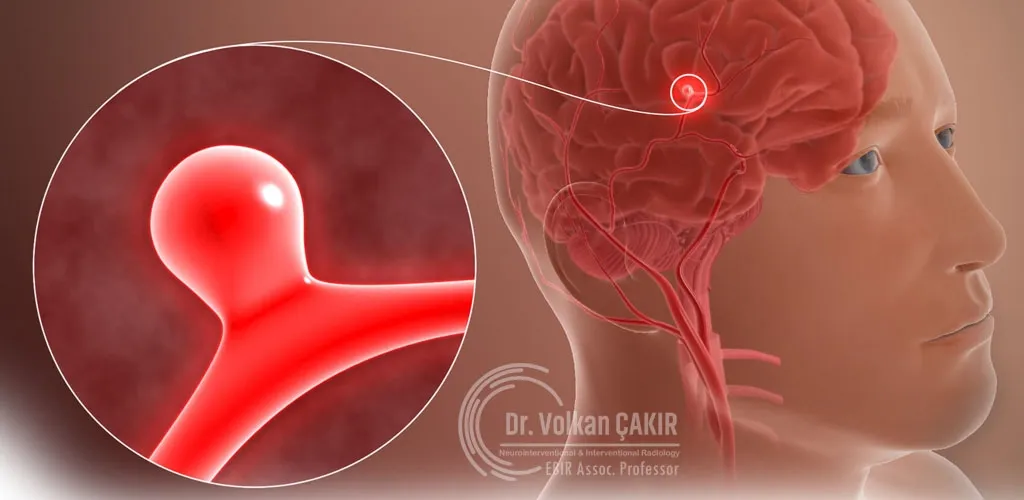
Endovascular therapy represents a major advancement in the treatment of brain aneurysms, offering highly effective results through minimally invasive techniques—without the need for open brain surgery. This approach allows specialists to treat aneurysms from within the blood vessels, significantly reducing risk while protecting healthy brain tissue.
Using ultra-thin, high-precision microcatheters and real-time imaging technology, neurointerventional experts carefully navigate the vascular system to reach the aneurysm site. Treatment is delivered directly inside the affected artery with exceptional accuracy, ensuring targeted care and optimal outcomes.
Endovascular aneurysm treatment is suitable for a wide range of clinical scenarios, including:
Ruptured brain aneurysms causing subarachnoid hemorrhage
Unruptured aneurysms with a high risk of rupture
Wide-neck, complex, or irregularly shaped aneurysms
Recurrent aneurysms or those previously treated with surgery or coiling
Deep-seated aneurysms that are difficult to access surgically
Each patient undergoes a comprehensive evaluation to determine the safest and most effective treatment strategy based on aneurysm anatomy and overall health status.
A variety of advanced endovascular techniques are available, either alone or in combination, depending on individual needs:
Coil embolization to safely block blood flow into the aneurysm
Stent-assisted coiling for wide-neck aneurysms
Flow diverter stents to redirect blood flow and promote natural healing
Intrasaccular devices designed to treat aneurysms from within the sac
Balloon-assisted remodeling techniques for added stability during treatment
These technologies allow precise, customized treatment while minimizing impact on surrounding brain structures.
Endovascular therapy is particularly advantageous for patients who:
Require urgent or emergency intervention
Are at higher risk for open brain surgery
Prefer less invasive treatment options
Seek faster recovery and shorter hospital stays
Have complex aneurysms not suitable for traditional surgery
Minimally invasive approach with no large surgical incisions
Lower risk of complications compared to open surgery
Reduced hospital stay and quicker discharge
Faster recovery and return to daily activities
Less post-procedural pain
High precision with excellent long-term clinical outcomes
Under the expert leadership of Dr. Volkan Cakir, patients at Fakeeh University Hospital benefit from state-of-the-art endovascular aneurysm treatments supported by cutting-edge technology and individualized care plans. Every treatment decision is guided by medical expertise, patient safety, and evidence-based practice.
At Fakeeh University Hospital, innovation, experience, and compassionate care come together to deliver the highest standards in neurointerventional treatment.
To learn more about endovascular treatment options for brain aneurysms or to schedule a personalized consultation, please contact us.
 Questions and Answers<
Interventional Radiology (IR) is a medical specialty that uses minimally invasive imaging techniques, such as X-rays, CT scans, and ultrasound, to guide procedures. These procedures can treat a wide range of conditions, such as cancer, cardiovascular disease, and certain infections, without the need for traditional surgery.
Interventional Neuroradiology (INR) is a subspecialty of radiology that focuses on the diagnosis and treatment of conditions affecting the brain, spine, and neck using minimally invasive techniques. Procedures in INR are guided by advanced imaging techniques such as angiography, CT, and MRI.