

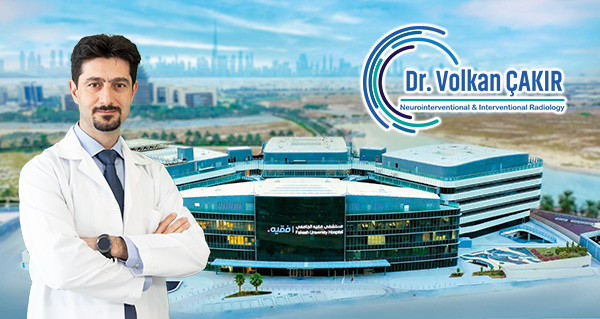
Dr. Volkan Çakır is a highly experienced Specialist in Interventional Radiology with over 15 years of experience. He completed his medical education at Dokuz Eylül University, School of Medicine, and further specialized in radiology. Dr. Çakır has held prominent positions such as Head of the Interventional Radiology Department and Associate Professor at reputed institutions in Turkey.
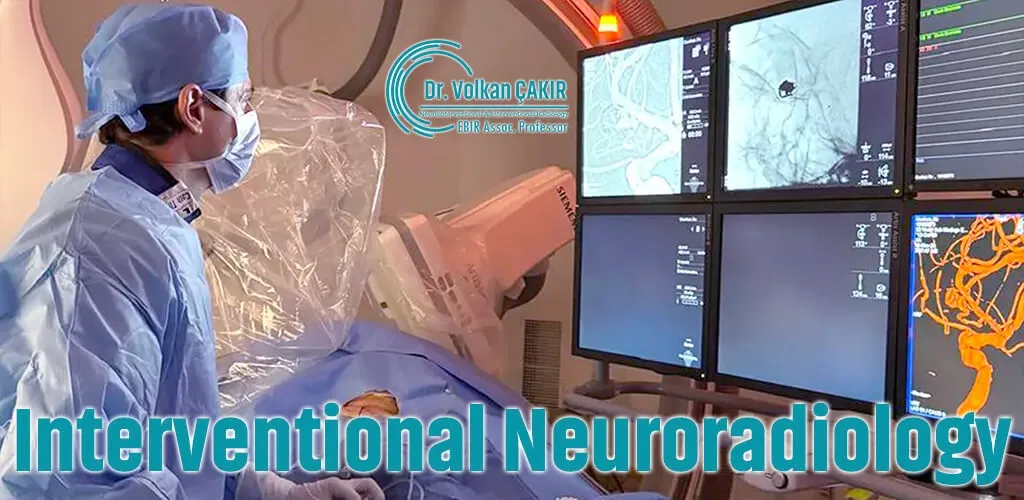
Neurological and vascular conditions affecting the brain and spine require highly specialized care. Today, many of these conditions can be treated without traditional open surgery thanks to interventional neuroradiology—a modern medical field that uses advanced imaging technology and minimally invasive techniques.
If you are searching for an Interventional Neuroradiology Doctor in Dubai, you are likely looking for cutting-edge treatments that provide high precision, faster recovery, and improved patient outcomes. Dubai has become a leading destination for international patients seeking advanced neurovascular care delivered by experienced Interventional Radiology Specialists using state-of-the-art technology.
This guide explains what interventional neuroradiology is, the conditions it treats, the procedures involved, and why many international patients choose Dubai for Interventional Radiology Treatment.
Interventional Radiology (IR) is a medical specialty that uses imaging technologies such as fluoroscopy, CT scans, MRI, and ultrasound to perform targeted Image-Guided Treatment inside the body.
Rather than performing large surgical incisions, an Interventional Radiology Doctor treats diseases through tiny punctures in the skin using thin tubes called catheters. These catheters are carefully guided through blood vessels to reach the affected area.
When these techniques are applied specifically to the brain, spinal cord, and neurovascular system, the field is called interventional neuroradiology.
Uses real-time imaging guidance
Performed through tiny incisions or needle punctures
Often done under local anesthesia or mild sedation
Requires specialized training in vascular and neurological anatomy
Allows precise treatment of complex vascular disorders
For many patients, Minimally Invasive Procedures performed by an experienced Interventional Radiology Specialist can replace traditional surgery and significantly reduce recovery time.
Interventional neuroradiology focuses specifically on diagnosing and treating diseases involving the blood vessels of the:
Brain
Spinal cord
Head and neck
Through advanced Image-Guided Treatment, an Interventional Radiology Doctor can navigate delicate blood vessels and treat conditions from inside the vessel itself.
The procedure usually begins with the insertion of a microcatheter through a small puncture in the wrist or groin artery. Using high-resolution imaging systems, the specialist carefully advances the catheter through the vascular system to the targeted area in the brain or spine.
Once positioned, the physician can perform precise Interventional Radiology Treatment such as:
Closing abnormal vessels
Removing clots
Placing stents
Repairing aneurysms
This innovative approach has transformed the management of many life-threatening neurological conditions.
An experienced Interventional Radiology Specialist in Dubai can diagnose and treat a wide range of complex neurovascular disorders.
A brain aneurysm occurs when a weak area in a blood vessel wall bulges outward. If it ruptures, it can cause a life-threatening hemorrhagic stroke.
Interventional Radiology Treatment allows aneurysms to be treated using endovascular techniques such as coiling or flow diverters, eliminating the need for open brain surgery in many cases.
AVMs are abnormal tangles of arteries and veins that disrupt normal blood flow in the brain or spinal cord.
These malformations can lead to:
Brain hemorrhage
Seizures
Neurological deficits
Image-Guided Treatment allows the abnormal vessels to be blocked using embolization techniques performed by an Interventional Radiology Doctor.
When a blood clot blocks a major artery supplying the brain, rapid treatment is critical.
A Minimally Invasive Procedure called mechanical thrombectomy can remove the clot and restore blood flow. When performed quickly, this treatment can dramatically reduce permanent brain damage.
Narrowing of the carotid arteries reduces blood flow to the brain and increases stroke risk.
Interventional radiology treatments include:
Carotid artery stenting
Balloon angioplasty
These Minimally Invasive Procedures restore blood flow without major surgery.
Some patients develop narrowing inside the arteries within the brain itself.
An Interventional Radiology Specialist can treat these conditions using advanced stenting techniques guided by high-resolution imaging.
These abnormal connections between arteries and veins in the brain’s protective covering can cause serious neurological symptoms.
Image-Guided Treatment can close these abnormal connections using embolization materials delivered through microcatheters.
Interventional neuroradiology can also treat rare but serious vascular conditions affecting the spinal cord, including:
Spinal AVMs
Spinal dural fistulas
Spinal vascular tumors
Early diagnosis and Interventional Radiology Treatment can prevent progressive neurological damage.
Modern Minimally Invasive Procedures used in interventional neuroradiology allow highly targeted treatment of complex vascular conditions.
Below are some of the most commonly performed procedures.
This technique is used to treat brain aneurysms.
Tiny platinum coils are inserted into the aneurysm through a catheter. These coils trigger clot formation inside the aneurysm, preventing rupture.
Benefits include:
No open brain surgery
Reduced recovery time
Excellent long-term outcomes
Flow diverters are specialized stents placed inside the parent artery near an aneurysm.
They redirect blood flow away from the aneurysm, allowing it to heal naturally over time.
This Image-Guided Treatment is particularly useful for large or complex aneurysms.
Mechanical thrombectomy is a life-saving Interventional Radiology Treatment used in acute stroke.
A catheter is guided to the blocked artery, where specialized devices remove the clot and restore blood circulation.
This Minimally Invasive Procedure can significantly improve recovery if performed quickly after stroke onset.
Embolization is used to block abnormal blood vessels such as AVMs or fistulas.
Materials used for embolization include:
Liquid embolic agents
Medical glue
Tiny particles or coils
This technique stops abnormal blood flow and reduces bleeding risk.
When arteries supplying the brain become narrowed, stents can be placed to keep them open.
These Image-Guided Treatments help restore normal circulation and reduce the risk of stroke.
The rise of Minimally Invasive Procedures has revolutionized modern medicine, particularly in neurology and vascular treatment.
Patients benefit from several advantages compared to traditional surgery.
Procedures are performed through a tiny puncture rather than large surgical incisions.
This greatly reduces trauma to surrounding tissues.
Many complex brain conditions can now be treated internally through blood vessels.
This significantly lowers surgical risk.
Image-Guided Treatment allows the Interventional Radiology Doctor to see blood vessels in real time and navigate with exceptional accuracy.
Smaller incisions and precise targeting reduce the risk of infection, bleeding, and other complications.
Many procedures require only a short hospital stay, and some patients can return home the next day.
Patients often return to normal activities much sooner than after traditional surgery.
Dubai has become a major international healthcare destination known for advanced technology and highly qualified specialists.
Our clinic offers world-class Interventional Radiology Treatment tailored to international patients.
Patients are treated by a highly experienced Interventional Radiology Doctor with specialized training in neurovascular interventions.
Every case is carefully evaluated to determine the most effective and safest treatment approach.
Our center utilizes cutting-edge imaging systems that allow precise Image-Guided Treatment of complex neurological conditions.
These technologies ensure accurate diagnosis and optimal procedural outcomes.
Successful neurovascular care often requires collaboration between specialists such as:
Neurologists
Neurosurgeons
Interventional radiologists
Intensive care specialists
This team approach ensures comprehensive treatment planning.
Every patient’s condition is unique.
Our Interventional Radiology Specialist develops customized treatment strategies based on:
Medical history
Imaging findings
Risk factors
Patient preferences
Dubai is easily accessible from Europe, Asia, and the Middle East, making it a convenient destination for international patients seeking advanced Minimally Invasive Procedures.
Our clinic provides support with:
Medical consultations
Treatment planning
International patient coordination
An Interventional Radiology Doctor performs minimally invasive procedures using medical imaging to diagnose and treat various conditions inside the body, including vascular disorders of the brain and spine.
Yes. When performed by an experienced Interventional Radiology Specialist, these procedures are considered safe and effective with lower risks compared to traditional open surgery.
Recovery time depends on the specific procedure and condition treated. However, most Minimally Invasive Procedures allow patients to recover much faster than conventional surgery.
Many Interventional Radiology Treatments can be performed with local anesthesia and mild sedation. Some complex procedures may require general anesthesia.
Patients with conditions such as brain aneurysms, vascular malformations, stroke, or arterial narrowing may benefit from Image-Guided Treatment. A consultation with an Interventional Radiology Specialist is required to determine eligibility.
Interventional neuroradiology represents one of the most advanced developments in modern medicine. Through Minimally Invasive Procedures and highly precise Image-Guided Treatment, many complex brain and spinal vascular conditions can now be treated safely and effectively.
Patients searching for an Interventional Neuroradiology Doctor in Dubai can benefit from world-class expertise, cutting-edge technology, and personalized care tailored to their individual needs.
If you or a loved one has been diagnosed with a neurovascular condition, consulting an experienced Interventional Radiology Specialist can help you explore modern treatment options that prioritize safety, effectiveness, and faster recovery.
 Questions and Answers<
Interventional Radiology (IR) is a medical specialty that uses minimally invasive imaging techniques, such as X-rays, CT scans, and ultrasound, to guide procedures. These procedures can treat a wide range of conditions, such as cancer, cardiovascular disease, and certain infections, without the need for traditional surgery.
Interventional Neuroradiology (INR) is a subspecialty of radiology that focuses on the diagnosis and treatment of conditions affecting the brain, spine, and neck using minimally invasive techniques. Procedures in INR are guided by advanced imaging techniques such as angiography, CT, and MRI.