

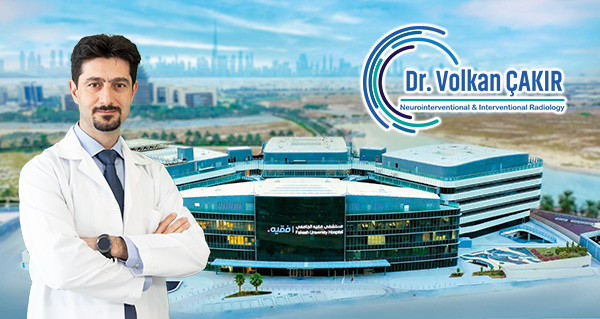
Dr. Volkan Çakır is a highly experienced Specialist in Interventional Radiology with over 15 years of experience. He completed his medical education at Dokuz Eylül University, School of Medicine, and further specialized in radiology. Dr. Çakır has held prominent positions such as Head of the Interventional Radiology Department and Associate Professor at reputed institutions in Turkey.
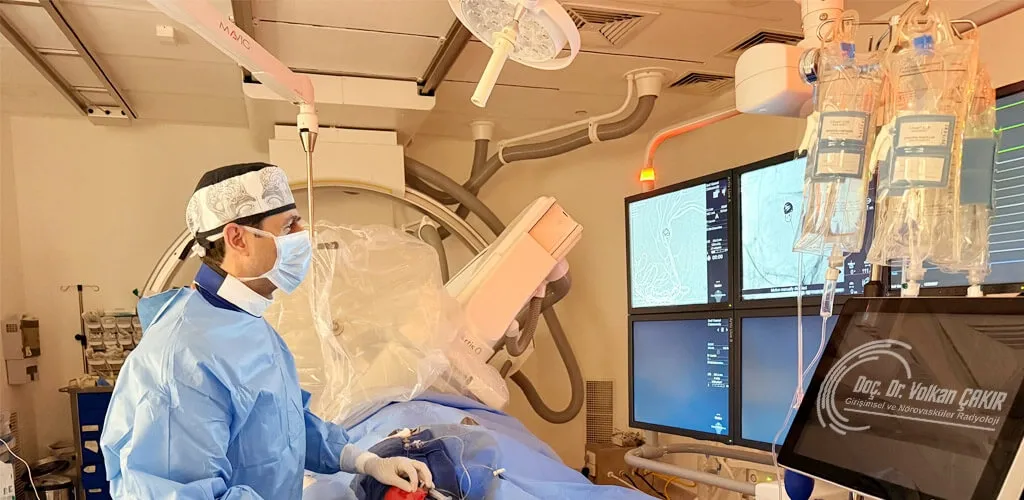
Finding the right medical specialist is one of the most important decisions when dealing with a health condition. Patients today are increasingly looking for treatments that are effective, safe, and require minimal recovery time. This is where Interventional Radiology Specialists play a crucial role.
Interventional radiology is one of the most advanced fields of modern medicine. It combines cutting-edge imaging technologies with highly precise techniques to perform Minimally Invasive Procedures that diagnose and treat a wide variety of diseases.
Instead of traditional open surgery, an experienced Interventional Radiology Doctor can treat many conditions through small incisions using advanced imaging guidance. This approach significantly reduces risks, hospital stays, and recovery time.
In this guide, you will learn everything you need to know about Interventional Radiology Treatment, the conditions it can treat, the procedures available, and why choosing an experienced specialist is essential for the best outcomes.
Interventional Radiology (IR) is a medical specialty that uses advanced imaging technology to perform targeted treatments inside the body without traditional surgery.
An Interventional Radiology Specialist performs procedures using imaging methods such as:
Ultrasound
CT scans
Fluoroscopy
MRI guidance
X-ray imaging
These technologies allow doctors to see inside the body in real time and guide instruments with exceptional precision.
Because the procedures are guided by imaging, they are often referred to as Image-Guided Treatment. This allows physicians to treat complex medical conditions through tiny incisions, often only a few millimeters wide.
Instead of large surgical openings, interventional radiologists typically insert a thin catheter, needle, or specialized instrument into the body through a small skin entry point.
Using imaging guidance, they navigate the instrument to the exact location of the disease or abnormal tissue. This allows them to deliver treatment precisely where it is needed.
Common treatment techniques include:
Blocking abnormal blood vessels
Destroying tumors using heat or freezing
Opening blocked arteries
Draining infections or fluid collections
Delivering medication directly to targeted areas
Because these procedures are minimally invasive, patients often experience faster recovery and fewer complications compared to traditional surgery.
An Interventional Radiology Specialist is a highly trained physician who combines expertise in radiology, minimally invasive techniques, and patient care.
Their training typically includes:
Medical school
Diagnostic radiology residency
Specialized fellowship in interventional radiology
This extensive training allows them to diagnose and treat complex conditions using Image-Guided Treatment techniques.
Interventional radiologists are known for their multidisciplinary expertise. They work closely with:
Oncologists
Vascular surgeons
Gastroenterologists
Urologists
Gynecologists
Orthopedic specialists
Their collaborative approach ensures patients receive the most effective treatment plan tailored to their condition.
A key strength of interventional radiologists is their patient-centered care model.
Each patient receives a personalized treatment plan that considers:
Medical history
Disease severity
Overall health condition
Lifestyle and recovery expectations
This approach helps patients achieve faster recovery and improved health outcomes.
Interventional radiology can treat a wide range of medical conditions affecting different organs and systems.
Some of the most common conditions treated include:
Interventional radiologists frequently treat disorders involving blood vessels, including:
Peripheral artery disease (PAD)
Deep vein thrombosis (DVT)
Varicose veins
Pulmonary embolism
Aneurysms
These conditions can often be treated using minimally invasive catheter-based techniques.
Interventional radiology plays a vital role in modern cancer care.
Many tumors can be treated using Image-Guided Treatment techniques that target cancer cells directly.
Common cancer treatments include:
Tumor ablation
Chemoembolization
Radioembolization
Targeted chemotherapy delivery
Tumor biopsies
These therapies are often used for cancers of the:
Liver
Kidney
Lung
Bone
Soft tissues
Interventional radiology provides effective non-surgical treatments for several gynecological conditions.
Examples include:
Uterine fibroids
Pelvic congestion syndrome
Adenomyosis
Many women choose these treatments because they preserve fertility and avoid major surgery.
Interventional radiology treatments are commonly used for:
Liver tumors
Liver cirrhosis complications
Kidney tumors
Dialysis access problems
These procedures allow doctors to treat critical organs while preserving healthy tissue.
Some Minimally Invasive Procedures are specifically designed to reduce chronic pain.
These include treatments for:
Spinal compression fractures
Joint pain
Cancer-related pain
Nerve-related pain
One of the main reasons patients seek care from an Interventional Radiology Doctor is the numerous benefits compared to traditional surgery.
Most Interventional Radiology Treatments require only a small incision, often less than a few millimeters.
This results in:
Less tissue damage
Reduced scarring
Lower risk of complications
Patients who undergo Minimally Invasive Procedures typically experience shorter recovery times.
Benefits include:
Same-day discharge in many cases
Faster return to daily activities
Reduced hospital stay
Compared to open surgery, image-guided treatments generally have lower risks of:
Infection
Bleeding
Postoperative pain
Thanks to real-time imaging guidance, treatments are extremely precise.
This allows doctors to target diseased tissue while preserving surrounding healthy structures.
Many procedures are performed under local anesthesia or light sedation, which means:
Less discomfort
No large surgical incisions
Reduced recovery stress
There are many types of Interventional Radiology Procedures, each designed to treat specific medical conditions.
Below are some of the most commonly performed treatments.
These procedures are used to open narrowed or blocked blood vessels.
A catheter is inserted into the artery, and a small balloon is inflated to widen the vessel. A stent may be placed to keep it open.
Conditions treated include:
Peripheral artery disease
Carotid artery stenosis
Kidney artery blockage
Tumor ablation is a minimally invasive cancer treatment.
Using imaging guidance, a probe is inserted into the tumor to destroy cancer cells using:
Heat (radiofrequency ablation)
Cold (cryoablation)
Microwave energy
This treatment is commonly used for liver, kidney, and lung tumors.
Embolization blocks abnormal blood vessels that feed tumors or cause bleeding.
Types include:
Uterine fibroid embolization
Prostate artery embolization
Tumor embolization
Trauma bleeding control
When doctors need to diagnose suspicious tissue, an Image-Guided Treatment approach allows them to obtain biopsy samples with extreme precision.
This technique reduces the need for surgical biopsies.
Interventional radiologists also treat infections or fluid buildup by inserting small drainage catheters.
These procedures treat conditions such as:
Abscesses
Pleural effusion
Biliary obstruction
Choosing the right healthcare provider is critical for achieving the best results.
Our clinic provides world-class Interventional Radiology Treatment for international patients seeking advanced medical care.
Our team consists of highly qualified Interventional Radiology Doctors with extensive clinical experience.
They perform a wide range of complex Minimally Invasive Procedures using the latest medical technology.
We use state-of-the-art equipment including:
High-resolution CT scanners
Advanced ultrasound systems
Real-time fluoroscopy imaging
These technologies ensure accurate diagnosis and safe treatment.
Every patient receives an individualized treatment plan tailored to their condition.
Our approach focuses on:
Patient safety
Treatment effectiveness
Faster recovery
We proudly serve patients from around the world by offering:
Multilingual support
Treatment coordination
Medical travel assistance
Comprehensive follow-up care
An Interventional Radiology Doctor performs minimally invasive procedures using advanced imaging technology to diagnose and treat various medical conditions.
Yes. Interventional Radiology Treatments are generally very safe because they are minimally invasive and performed using precise imaging guidance.
Most procedures do not require traditional surgery. Instead, doctors perform Minimally Invasive Procedures through tiny skin incisions.
Recovery time depends on the procedure, but many patients return home the same day and resume normal activities within a few days.
Patients with vascular diseases, cancer, chronic pain, or organ-related conditions may benefit from treatment by an Interventional Radiology Specialist.
A consultation with an experienced specialist is the best way to determine the most suitable treatment option.
Interventional radiology has transformed modern healthcare by offering effective treatments without the need for major surgery.
With advanced Image-Guided Treatment techniques and highly skilled Interventional Radiology Specialists, patients can benefit from safer procedures, faster recovery, and excellent medical outcomes.
If you are searching for the best interventional radiology doctors, choosing a clinic that prioritizes expertise, technology, and patient-centered care can make all the difference in your treatment journey.
 Questions and Answers<
Interventional Radiology (IR) is a medical specialty that uses minimally invasive imaging techniques, such as X-rays, CT scans, and ultrasound, to guide procedures. These procedures can treat a wide range of conditions, such as cancer, cardiovascular disease, and certain infections, without the need for traditional surgery.
Interventional Neuroradiology (INR) is a subspecialty of radiology that focuses on the diagnosis and treatment of conditions affecting the brain, spine, and neck using minimally invasive techniques. Procedures in INR are guided by advanced imaging techniques such as angiography, CT, and MRI.