

Dr. Volkan Çakır is a highly experienced Specialist in Interventional Radiology with over 15 years of experience. He completed his medical education at Dokuz Eylül University, School of Medicine, and further specialized in radiology. Dr. Çakır has held prominent positions such as Head of the Interventional Radiology Department and Associate Professor at reputed institutions in Turkey.
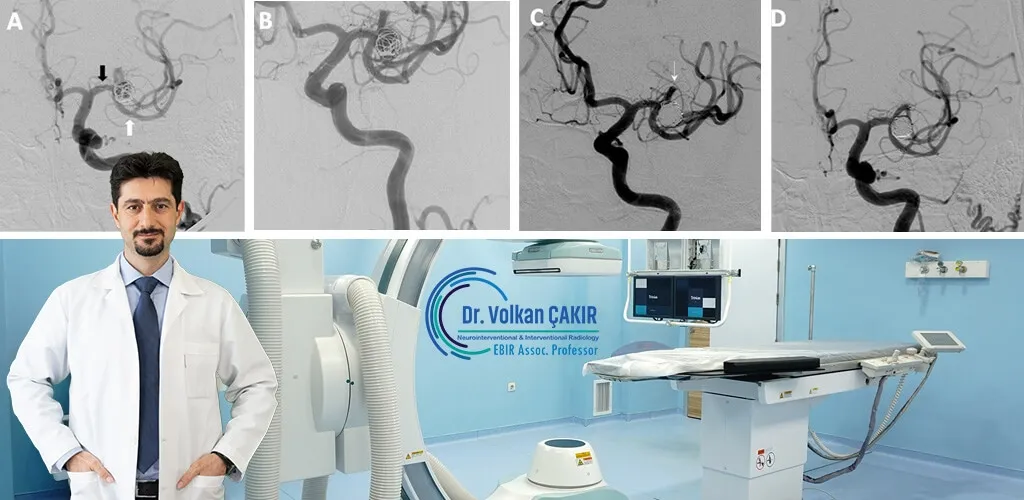
Coil embolization is an advanced, minimally invasive endovascular treatment designed to safely manage brain aneurysms without the need for open brain surgery. This highly specialized procedure significantly reduces the risk of aneurysm rupture or rebleeding while preserving healthy brain tissue.
A brain aneurysm is a weakened, bulging area in a blood vessel within the brain. If left untreated, it may rupture and cause a life-threatening condition known as subarachnoid hemorrhage. Early diagnosis and timely intervention are critical to preventing severe neurological damage or death.
Coil embolization has become one of the most effective and widely preferred treatment options for both ruptured and unruptured cerebral aneurysms.
How Coil Embolization Works
During the procedure, a neurointerventional specialist inserts a microcatheter through a small incision—typically in the groin or wrist—and carefully navigates it through the blood vessels to reach the aneurysm using real-time imaging guidance.
Promote controlled clot formation within the aneurysm
Block blood flow into the weakened vessel area
Prevent further expansion
Significantly reduce the risk of rupture or rebleeding
The procedure is performed under advanced imaging technology to ensure high precision and optimal safety.
Conditions Treated with Coil Embolization
Coil embolization is an effective solution for:
Ruptured brain aneurysms (subarachnoid hemorrhage)
Unruptured aneurysms with a high risk of bleeding
Wide-neck aneurysms requiring adjunctive techniques
Recurrent aneurysms previously treated with surgery or coiling
Complex or deep-seated aneurysms that are difficult to access surgically
Depending on the aneurysm’s anatomy, coil embolization may be performed alone or combined with advanced supportive techniques such as:
Stent-assisted coiling
Balloon remodeling techniques
These adjunctive approaches improve stability and long-term treatment success in selected cases.
Compared to traditional open brain surgery (clipping), coil embolization offers several important benefits:
✔ No large surgical incisions
✔ Reduced risk of complications
✔ Shorter hospital stay
✔ Faster recovery time
✔ Minimal postoperative discomfort
✔ Lower impact on surrounding healthy brain tissue
✔ High precision with excellent clinical outcomes
Because the skull does not need to be opened, patients often experience quicker mobilization and a faster return to daily activities.
Who Is a Candidate for Coil Embolization?
This treatment is particularly beneficial for patients who:
Require urgent, life-saving intervention
Are considered high-risk for open brain surgery
Prefer a minimally invasive solution
Have aneurysms located in complex or surgically challenging areas
Need retreatment for previously managed aneurysms
Each case requires detailed imaging assessment and individualized treatment planning to determine the most appropriate therapeutic strategy.
Advanced Neurointerventional Care in Dubai
Under the expert care of Dr. Volkan Cakir, patients receive comprehensive evaluation and state-of-the-art endovascular treatment tailored to their specific condition.
Coil embolization procedures are performed at Fakeeh University Hospital, a leading tertiary medical center located in Dubai Silicon Oasis. The hospital is equipped with advanced angiography suites and cutting-edge neuroimaging systems that support high-precision, minimally invasive brain aneurysm treatment.
By combining clinical expertise, innovative technology, and patient-centered care, the goal is always to ensure maximum safety, optimal outcomes, and compassionate support throughout the treatment journey.
Why Early Evaluation Matters
Brain aneurysms may remain silent until rupture. If you experience symptoms such as:
Sudden severe headache
Visual disturbances
Neck stiffness
Neurological deficits
Family history of aneurysys
early consultation with a neurointerventional specialist is strongly recommended.
Timely diagnosis through advanced imaging can allow for preventive treatment before complications occur.
Personalized Consultation for Brain Aneurysm Treatment
If you or a loved one has been diagnosed with a brain aneurysm, minimally invasive coil embolization may be a safe and highly effective treatment option.
For detailed evaluation, personalized treatment planning, and expert neurointerventional care in Dubai, schedule a consultation to discuss the most appropriate solution for your condition.
 Questions and Answers<
Interventional Radiology (IR) is a medical specialty that uses minimally invasive imaging techniques, such as X-rays, CT scans, and ultrasound, to guide procedures. These procedures can treat a wide range of conditions, such as cancer, cardiovascular disease, and certain infections, without the need for traditional surgery.
Interventional Neuroradiology (INR) is a subspecialty of radiology that focuses on the diagnosis and treatment of conditions affecting the brain, spine, and neck using minimally invasive techniques. Procedures in INR are guided by advanced imaging techniques such as angiography, CT, and MRI.